MENU
🦕 Hello Explorers! We’re excited to welcome you to Moab Giants!
Open 6 days a week
🗓 Monday, Tuesday, Thursday, Friday, Saturday & Sunday
🚪 Closed Wednesdays
🕙 10:00 AM – 6:00 PM
🎟 Last entry at 5:00 PM
Enjoy a full day of indoor and outdoor adventures — explore our outdoor dinosaur trail, then step inside for interactive exhibits, hands-on learning, and immersive experiences perfect for all ages.
We can’t wait to see you in the park! 🦖
Follow @moabgiants for updates, special events & more
Diet : Herbivorous
Habitat : Floodplains and plains with rivers and lakes
Length : About 4.3 feet (1.3 meters)
Weight : 6.6-22 lb (3-10 kg)
Anomoepus footprints were originally described from the Lower Jurassic of the eastern United States by E. Hitchcock in 1848. He found them difficult to interpret. Later, they were also discovered in the western United States (and many other places around the World). Anomoepus footprints in this region were possibly left by early ornithischians like Scutellosaurus, also found in the strata of the same age in the western U.S.A. Anomoepus localities were reported in Utah, from Moab area, around Lake Powell and from the Lisbon Valley Oilfield. The length of the Anomoepus footprint is usually about 4 inches (10 cm) in length.
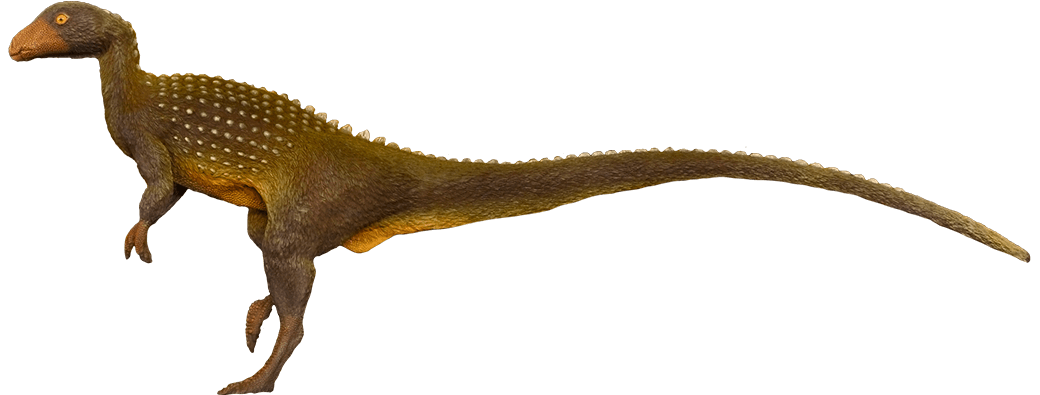
The best trackmaker example of tracks names as Anomoepus is Scutellosaurus, known from Early Jurassic from the U.S.A. The name Scutellosaurus means “little-shielded lizard”. Scutellosaurus was a small plant-eater of the Thyreophora group, which included stegosaurs and ankylosaurs. It was one of the earliest representatives of armoured dinosaurs. It was distinguished by a very long tail and an abundance of armour plates. Scutellosaurus may have been mostly bipedal, as is shown by the long slender hind limbs and compact hind foot.
© 2025 Moab Giants. All Rights Reserved | Site & Utah Search Engine Marketing by Red Olive