MENU
WELCOME, EXPLORERS!
Join us at Moab Giants for a prehistoric adventure filled with life-sized dinosaurs, interactive discoveries, and unforgettable family fun.
🕒 OCTOBER OPENING HOURS
Open: Monday, Tuesday & Thursday–Sunday
Closed: Wednesdays
Hours: 10:00 AM – 6:00 PM
🎟 Last Admission: 5:00 PM
🕒 NOVEMBER OPENING HOURS
Open: Thursday–Monday
Closed: Tuesdays & Wednesdays
Hours: 10:00 AM – 5:00 PM
🎟 Last Admission: 4:00 PM
🦖 YOUR ADVENTURE INCLUDES
A scenic outdoor trail featuring life-sized dinosaurs
Interactive indoor exhibits for curious explorers
Incredible photo opportunities for the whole family
Hands-on experiences for adventurers of all ages
Bring the whole family for a day of discovery, excitement, and unforgettable memories in Utah’s dinosaur country!
We can’t wait to welcome you on your prehistoric adventure!
📲 Follow @moabgiants for the latest updates, special events, and more.
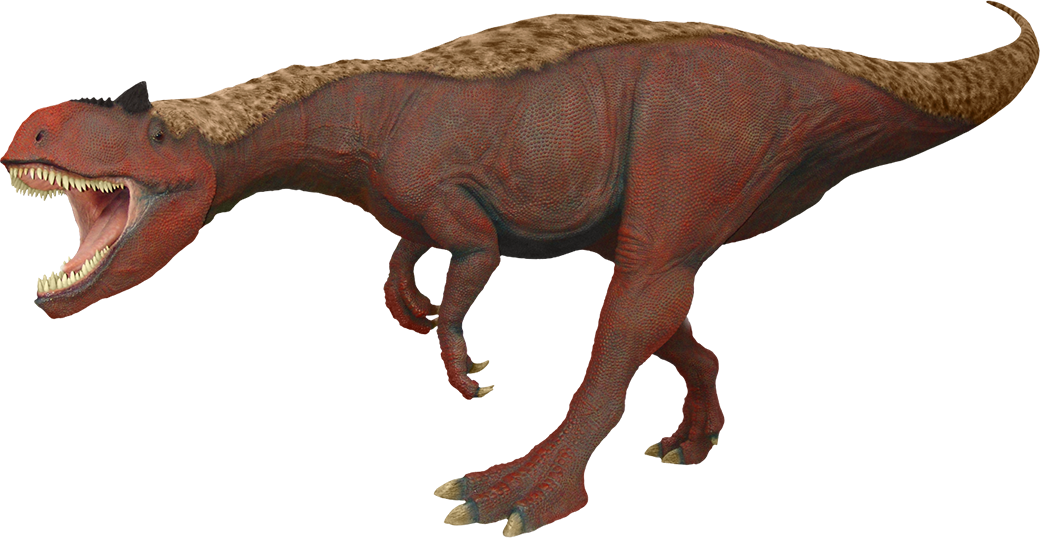
Diet : Carnivorous
Habitat : Plains
Length : Up to 24 feet (7.4 m)
Weight : about 3,300 lb (1.5 tonnes)
These tracks probably represented allosaurid trackmaker and show a worldwide distribution of this kind of footprints in the Late Jurassic. M. Lockley (1996) described similar tracks from the Late Jurassic in North America, Europe and Asia. Lockley and co-authors in 1998 restricted the name Megalosauripus to label the footprints with distinct phalangeal pad impressions. But for smaller footprints lacking phalangeal pads distinctly imprinted they erected an ichnogenus Therangospodus. Megalosauripus occurs in the Entrada Sandstone and Morrison Formation, in the Moab area. Recently, J. Foster described in the Morrison Formation similar track to Megalosauripus, but smaller, named Hispanosauropus.
Allosaurids were the largest terrestrial carnivores of the U.S.A. Even though the most famous genus, Allosaurus lived at the turn of the Late Jurassic. Allosaurs had short but strong front limbs with three digits armored with hook-shaped claws (the biggest located on its thumb). These carnivores were certainly able to attack even the enormous, long-necked sauropods. Their teeth were thinner and sharper than those of tyrannosaurs, obviously adapted to cut meat instead of crushing bones. The head of Allosaurus was ornamented with two bony crests extending from the nostrils up to the eyes. They had different shapes and sizes depending on the individual, for instance to distinguish the sex.