MENU
WELCOME, EXPLORERS!
Join us at Moab Giants for a prehistoric adventure filled with life-sized dinosaurs, interactive discoveries, and unforgettable family fun.
🕒 OCTOBER OPENING HOURS
Open: Monday, Tuesday & Thursday–Sunday
Closed: Wednesdays
Hours: 10:00 AM – 6:00 PM
🎟 Last Admission: 5:00 PM
🕒 NOVEMBER OPENING HOURS
Open: Thursday–Monday
Closed: Tuesdays & Wednesdays
Hours: 10:00 AM – 5:00 PM
🎟 Last Admission: 4:00 PM
🦖 YOUR ADVENTURE INCLUDES
A scenic outdoor trail featuring life-sized dinosaurs
Interactive indoor exhibits for curious explorers
Incredible photo opportunities for the whole family
Hands-on experiences for adventurers of all ages
Bring the whole family for a day of discovery, excitement, and unforgettable memories in Utah’s dinosaur country!
We can’t wait to welcome you on your prehistoric adventure!
📲 Follow @moabgiants for the latest updates, special events, and more.
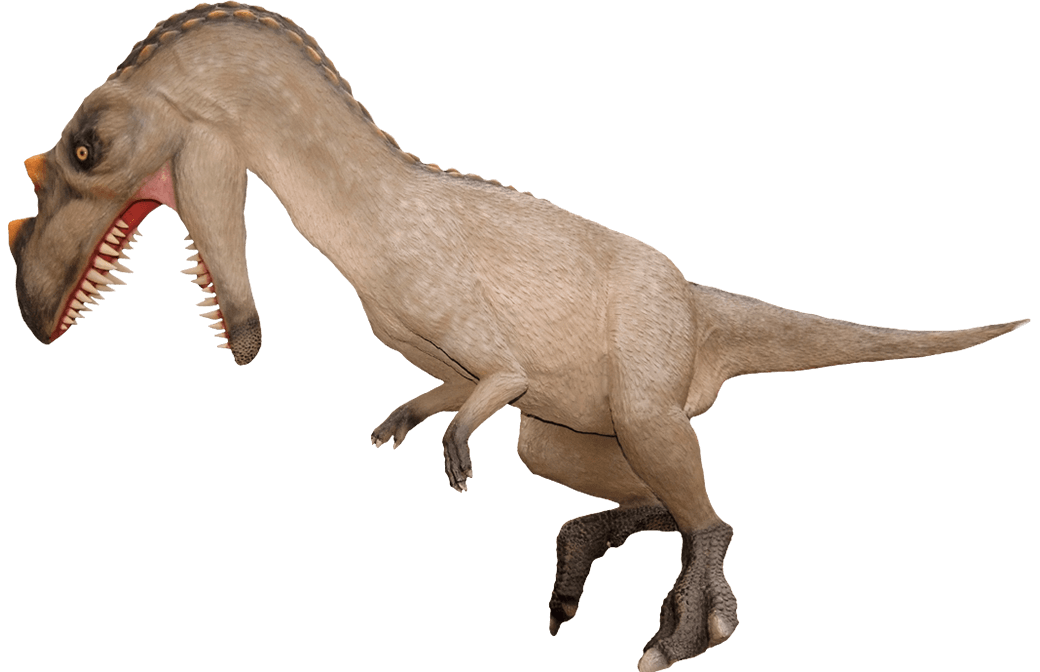
Diet : Carnivorous
Habitat : Marshes and swamps
Length : About 13-20 feet (4-6 meters)
Weight : About 600-1,000 lb (275-450 kg)
Therangospodus means “narrow footed theropod track”. These tracks generally show the typical theropod morphology, but with elongated cigar-shaped toes, without separate pad impressions. Therangospodus is found in the Upper Jurassic and Lower Cretaceous of Europe, Africa and Asia. In Utah, Therangospodus is one of the most common tracks of Moab area common throughout the huge Moab Megatracksite, in the Entrada Sandstone, in and around Arches National Park. The possible trackmakers are Marshosaurus and Ceratosaurus.
The name Ceratosaurus meaning ‘horned lizard’ refers to the horn on its nose. It was a dangerous predator with dermal armor in the form of small bony plates (osteoderms) along its back. It had huge jaws with blade-like teeth, a large nasal horn and a pair of hornlets over its eyes. Its teeth allowed it to attack even large herbivorous dinosaurs. In the Late Jurassic of North America it was a rare relic of a primitive theropod group. Relatives like Carnotaurus survived in the southern hemisphere into the Cretaceous period and reached gigantic sizes.