MENU
WELCOME, EXPLORERS!
Join us at Moab Giants for a prehistoric adventure filled with life-sized dinosaurs, interactive discoveries, and unforgettable family fun.
🕒 OCTOBER OPENING HOURS
Open: Monday, Tuesday & Thursday–Sunday
Closed: Wednesdays
Hours: 10:00 AM – 6:00 PM
🎟 Last Admission: 5:00 PM
🕒 NOVEMBER OPENING HOURS
Open: Thursday–Monday
Closed: Tuesdays & Wednesdays
Hours: 10:00 AM – 5:00 PM
🎟 Last Admission: 4:00 PM
🦖 YOUR ADVENTURE INCLUDES
A scenic outdoor trail featuring life-sized dinosaurs
Interactive indoor exhibits for curious explorers
Incredible photo opportunities for the whole family
Hands-on experiences for adventurers of all ages
Bring the whole family for a day of discovery, excitement, and unforgettable memories in Utah’s dinosaur country!
We can’t wait to welcome you on your prehistoric adventure!
📲 Follow @moabgiants for the latest updates, special events, and more.
Diet : Omnivorous
Habitat : Plains with rivers and lakes
Length : About 6.5 feet (2 meters)
Weight : About 110 lb (50 kg)
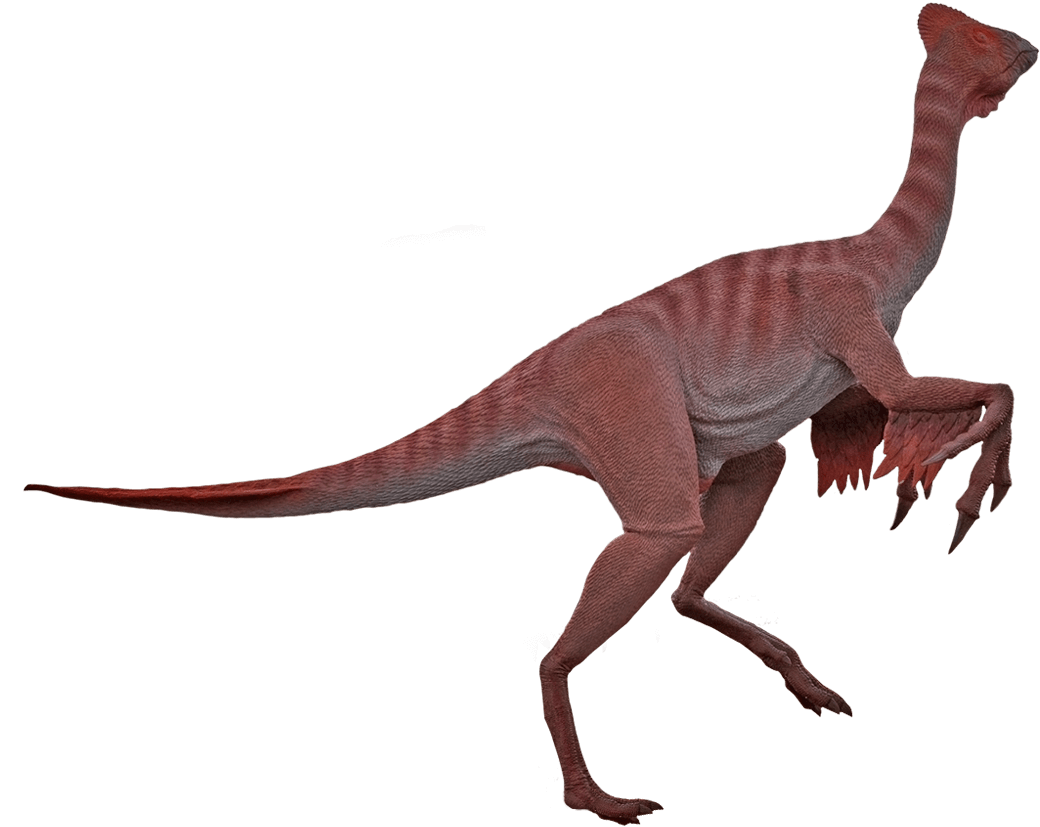
The large three-toed, bird-like footprints of Saurexallopus are known from the Late Cretaceous of western North America. Since Saurexallopus was described by J. Harris and others, in 1996, from the Wyoming, is recently known from several other localities (Wyoming, Colorado, Alaska) and even abroad. The trackmaker affinity of Saurexallopus was unknown until G. Gierliński and M. Lockley (2013) point to the fact that the only Late Cretaceous vertebrates in North America, with tetradactyl bird-like feet large enough to produce these ichnites are oviraptosaurs, like Chirostenotes.
This lightly built bird-like theropod Chirostenotes pergracilis was named on the basis of its distinctive narrow hands (D. Lessem and D.F. Glut 1993). It was characterized by a beak, long arms ending in powerful claws; long, slender toes and a tall, rounded cassowary-like crest or casque. Late Cretaceous Chirostenotes known from Canada and U.S.A. was probably an omnivore or herbivore. The third finger of the hand was longer than the first and very slender. The toe bones were also long and slender. The hands were suitable for collecting mollusks, other invertebrates, and eggs. The long, slender, specialized third finger may have been used to pry insects and other invertebrates from crevices in trees or streams, or even used for “grooming”. The long hindlimbs and large feet could have been adapted for wading.