MENU
WELCOME, EXPLORERS!
Join us at Moab Giants for a prehistoric adventure filled with life-sized dinosaurs, interactive discoveries, and unforgettable family fun.
🕒 OCTOBER OPENING HOURS
Open: Monday, Tuesday & Thursday–Sunday
Closed: Wednesdays
Hours: 10:00 AM – 6:00 PM
🎟 Last Admission: 5:00 PM
🕒 NOVEMBER OPENING HOURS
Open: Thursday–Monday
Closed: Tuesdays & Wednesdays
Hours: 10:00 AM – 5:00 PM
🎟 Last Admission: 4:00 PM
🦖 YOUR ADVENTURE INCLUDES
A scenic outdoor trail featuring life-sized dinosaurs
Interactive indoor exhibits for curious explorers
Incredible photo opportunities for the whole family
Hands-on experiences for adventurers of all ages
Bring the whole family for a day of discovery, excitement, and unforgettable memories in Utah’s dinosaur country!
We can’t wait to welcome you on your prehistoric adventure!
📲 Follow @moabgiants for the latest updates, special events, and more.
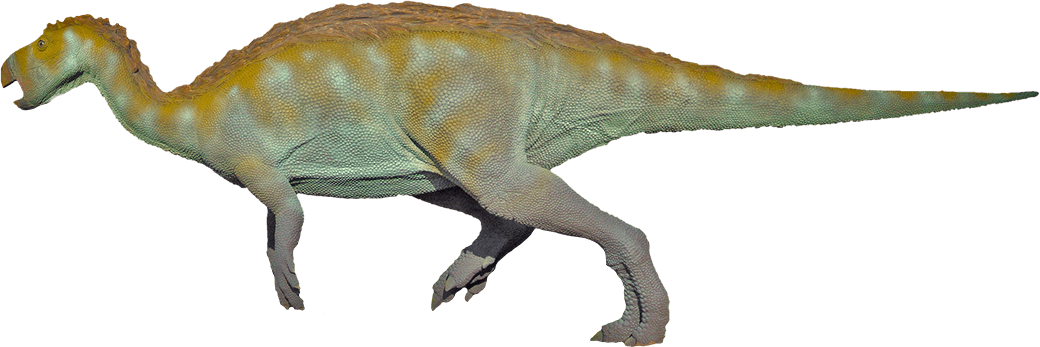
Diet : Herbivorous
Habitat : Forest areas, often near river channels
Length : 13 feet (4 meters)
Weight : About 480 lb (220 kg)
The Dinehichnus track assemblage from the Morrison Formation of the Boundary Butte in Utah are supposed by Gerard Gierliński and Karol Sabath, in 2008, to have been left by the ornithopod multispecies herd comprised of camptosaurids and dryosaurids. The large Dinehichnus footprints (9 inches, 23 cm long) are supposed to be left by Camptosaurus. Those large Dinehichnus ichnites are slightly different in shape from smaller tracks with a slightly more projected middle toe. This is interesting because normally we observe the progression from the juvenile to the adult size individual. Then in case of dinosaur tracks we observe the opposite phenomenon, which is true as well and proves that these are made by two different species.
A bulky plant-eater, Camptosaurus from Late Jurassic of U.S.A. (Morrison Formation of Wyoming, Utah, Colorado and Oklahoma) resembled the more advanced herbivore Iguanodon. Camptosaurus had a primitive hand, where a first finger had a short spike like the Iguanodon. Also, the ends of its second and third fingers were more curved and less hoof-like than Iguanodon‘s. Camptosaurus had heavy hindlimbs and short forelimbs, suggesting that it may have moved on two legs. Its large bony wrists indicate that it could also walk on all fours, probably when grazing on low-growing vegetation. Based on studies of other iguanodonts, scientists believe Camptosaurus may have been able to achieve running speeds of 15 miles (25 km) per hour.