MENU
WELCOME, EXPLORERS!
Join us at Moab Giants for a prehistoric adventure filled with life-sized dinosaurs, interactive discoveries, and unforgettable family fun.
🕒 OCTOBER OPENING HOURS
Open: Monday, Tuesday & Thursday–Sunday
Closed: Wednesdays
Hours: 10:00 AM – 6:00 PM
🎟 Last Admission: 5:00 PM
🕒 NOVEMBER OPENING HOURS
Open: Thursday–Monday
Closed: Tuesdays & Wednesdays
Hours: 10:00 AM – 5:00 PM
🎟 Last Admission: 4:00 PM
🦖 YOUR ADVENTURE INCLUDES
A scenic outdoor trail featuring life-sized dinosaurs
Interactive indoor exhibits for curious explorers
Incredible photo opportunities for the whole family
Hands-on experiences for adventurers of all ages
Bring the whole family for a day of discovery, excitement, and unforgettable memories in Utah’s dinosaur country!
We can’t wait to welcome you on your prehistoric adventure!
📲 Follow @moabgiants for the latest updates, special events, and more.
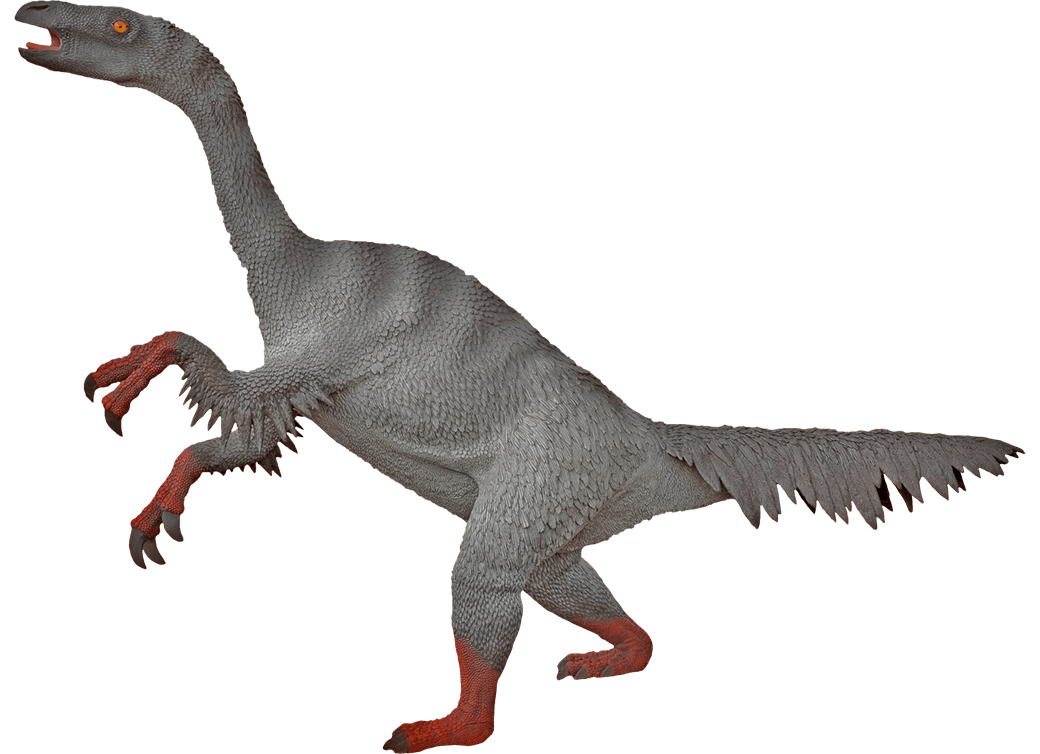
Diet : Herbivorous or even omnivorous
Habitat : Tropical Jungle
Length : 8 to 20 feet (2.5-5.1 meters)
Weight : 440-2,700 lb (200-1,200 kg)
The first trackway of Macropodosaurus was described by S. Zakharov from the Cretaceous of Tadzhikistan, in 1964. However, their origin was unknown until A. Sennikov identified them as therizinosaurid tracks in 2006. A footprint of that kind in North America was found for the first time by G. Gierliński, in 2008, in the Muddy Creek Canyon, Utah. This find is significant because Macropodosaurus has not been previously reported from North America. The Utah tracks are smaller than those from Eurasia. They are about 12 inches long (30 cm) long with four slender, tapering digits.
The name Nothronychus means “sloth-like claw”. This Late Cretaceous dinosaur was described in 2001 from the region between Arizona and New Mexico known as the Zuni Basin. It was the first definite find of therezinosaurs in North America. Nothronychus had a stout, robust belly, a short tail, a small head and very long arms with 4 inch (10 cm) long, curved claws on its elongated hands. Its teeth were leaf-shaped like other plant-eating dinosaurs. Nothronychus lived in a tropical jungle environment and probably fed on a variety of plants. This herbivorous animal spent most of its waking hours plucking and swallowing vast quantities of leaves. Its inner arms, chest and lower neck were probably free of feathers.