MENU
WELCOME, EXPLORERS!
Join us at Moab Giants for a prehistoric adventure filled with life-sized dinosaurs, interactive discoveries, and unforgettable family fun.
🕒 OCTOBER OPENING HOURS
Open: Monday, Tuesday & Thursday–Sunday
Closed: Wednesdays
Hours: 10:00 AM – 6:00 PM
🎟 Last Admission: 5:00 PM
🕒 NOVEMBER OPENING HOURS
Open: Thursday–Monday
Closed: Tuesdays & Wednesdays
Hours: 10:00 AM – 5:00 PM
🎟 Last Admission: 4:00 PM
🦖 YOUR ADVENTURE INCLUDES
A scenic outdoor trail featuring life-sized dinosaurs
Interactive indoor exhibits for curious explorers
Incredible photo opportunities for the whole family
Hands-on experiences for adventurers of all ages
Bring the whole family for a day of discovery, excitement, and unforgettable memories in Utah’s dinosaur country!
We can’t wait to welcome you on your prehistoric adventure!
📲 Follow @moabgiants for the latest updates, special events, and more.
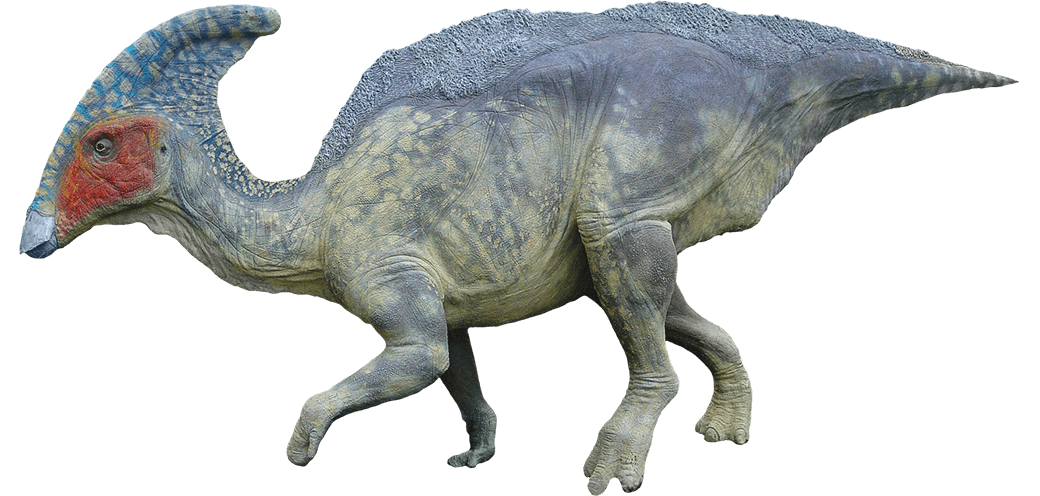
Diet : Herbivorous
Habitat : North American overflow areas of the river meanders
Length : Up to 29 feet (9 meters)
Weight : up 5,700 lb (2.6 tonnes)
Footprints of Late Cretaceous duck-billed dinosaurs or “hadrosaurs” were named Hadrosauropodus, what means “hadrosaur track”. They are relatively common in the Upper Cretaceous of North America. In Utah, they can be found among the rich material from Blackhawk Formation of Price area. However, these tracks are the isolated casts from the coal mines and have not been described in detail. The most recent find came from Castlegate Sandstone of the Thompson Pass area in Utah and seems to be Hadrosauropodus made by juvenile hadrosaur.
The good example of Hadrosauropus trackmaker is Parasaurolophus from Late Cretaceous of Canada. This name means “near crested lizard” just as Saurolophus means “crested lizard”. It was a herbivorous dinosaur, eating plants. Its skull permitted a grinding motion similar to chewing. Its teeth were continually replacing and packed into dental batteries with hundreds of teeth. It used its duck-billed beak to crop plant material. It was built to walk on all fours as well as on two legs. Parasaurolophus was distinguished by the long, hollow cranial crest, curved structure longer than the rest of skull, which protruded from the rear of the head. The crests of male parasaurophuses were longer the those of females. One current theory is that these tubes might have produced blast of sound, when filled with air.