MENU
WELCOME, EXPLORERS!
Join us at Moab Giants for a prehistoric adventure filled with life-sized dinosaurs, interactive discoveries, and unforgettable family fun.
🕒 OCTOBER OPENING HOURS
Open: Monday, Tuesday & Thursday–Sunday
Closed: Wednesdays
Hours: 10:00 AM – 6:00 PM
🎟 Last Admission: 5:00 PM
🕒 NOVEMBER OPENING HOURS
Open: Thursday–Monday
Closed: Tuesdays & Wednesdays
Hours: 10:00 AM – 5:00 PM
🎟 Last Admission: 4:00 PM
🦖 YOUR ADVENTURE INCLUDES
A scenic outdoor trail featuring life-sized dinosaurs
Interactive indoor exhibits for curious explorers
Incredible photo opportunities for the whole family
Hands-on experiences for adventurers of all ages
Bring the whole family for a day of discovery, excitement, and unforgettable memories in Utah’s dinosaur country!
We can’t wait to welcome you on your prehistoric adventure!
📲 Follow @moabgiants for the latest updates, special events, and more.
Diet : Herbivorous
Habitat : Plains
Length : 21-42.5 feet (6.5-13 meters)
Weight : 8,800-15,400 lbs. (4-7 tonnes)
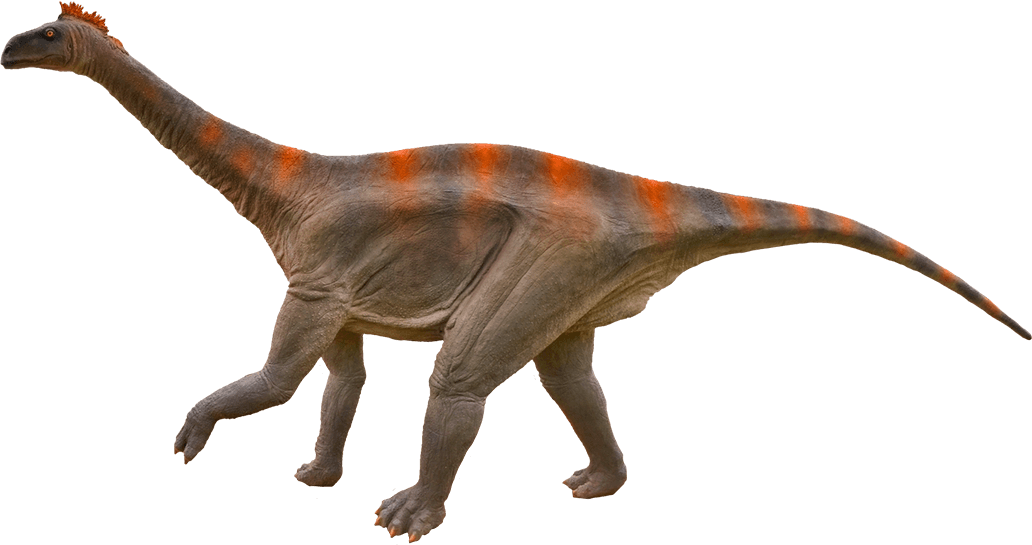
The name Eosauropus means “dawn saurian footprint”. This is a narrow-gauge trackway of a large quadruped with strong heteropody, pes (foot) much larger than manus (hand) and short step and stride. Pes elongate, oval, tetradactyl to pentadactyl, with long axis and prominent distal claw impressions outwardly rotated. Manus is transverse, tetradactyl to pentadactyl with outwardly-rotated digit impressions and concave posterior margins. This distinguished track type, which is also known from the Moab area, is supposed to be left by the earliest sauropod.
The example of Eosauropus trackmaker is Isanosaurus attavipachi, known from the Late Triassic of Thailand. Isanosaurus means “Isan [northeastern Thailand] lizard”. This dinosaur is the most primitive sauropod. The discovery of Isanosaurus attavipachi not only shows that by Late Triassic times the Sauropoda had already appeared, but also suggests that they must have had a relatively long and almost completely unknown evolutionary history in the Late Triassic. The gigantic sauropod evolved quickly after the appearance of dinosaurs (according to Paul, 2010).