MENU
🦕 Hello Explorers! We’re excited to welcome you to Moab Giants!
Open 6 days a week
🗓 Monday, Tuesday, Thursday, Friday, Saturday & Sunday
🚪 Closed Wednesdays
🕙 10:00 AM – 6:00 PM
🎟 Last entry at 5:00 PM
Enjoy a full day of indoor and outdoor adventures — explore our outdoor dinosaur trail, then step inside for interactive exhibits, hands-on learning, and immersive experiences perfect for all ages.
We can’t wait to see you in the park! 🦖
Follow @moabgiants for updates, special events & more
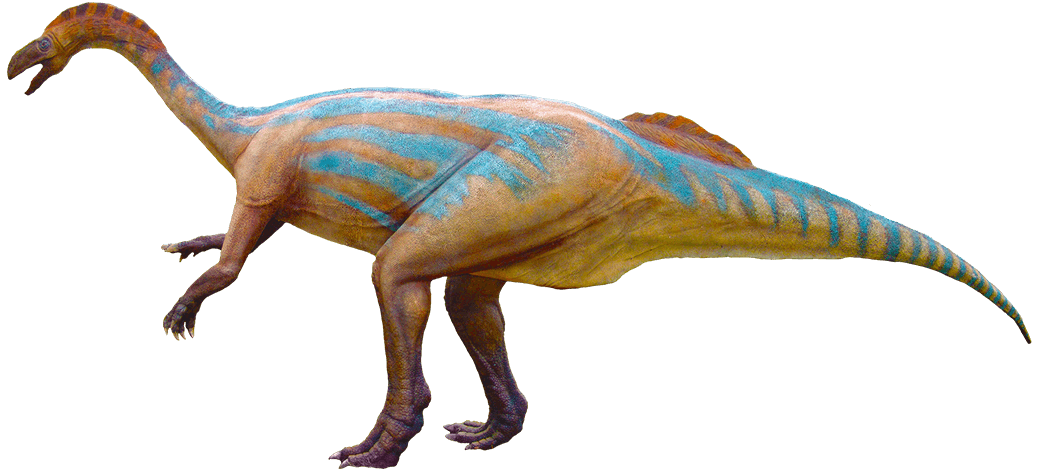
Diet : Herbivorous
Habitat : Plains and uplands
Length : 19.5-28 feet (6-8.5 meters)
Weight : 1,760-4,200 lb (800-1,900 kg)
Otozoum is one of the classic nineteenth century footprint types recognized and named by E. Hitchcock, in 1847. This is a medium or large four-toed footprint widely considered as plateosaurid prosauropod track. In the Moab area Otozoum occurs in the Early Jurassic Kayenta Sandstone-Navajo Formation transition zone. Its possible trackmaker was a plateosaurid Seitaad described recently by J. Sertich and M. Loewen, in 2010, from the Kayenta-Navajo transition zone of southeastern Utah. In the recent years also, interesting concentration of Otozoum trackways near Moab was found by J. Pillus, then explored by the Paleosafari Explorer Team and published by M. Lockley and G. Gierliński, in 2014.
Plateosaurus (meaning ‘flat lizard’) is a genus of the prosauropod dinosaur that lived during the Late Triassic in Europe and Greenland. Discovered in 1834 and described three years later, Plateosaurus was one of the first dinosaurs formally named. Plateosaurus were bulky bipedal herbivores which had small heads on long necks, sharp plant-crushing teeth, powerful limbs, and large thumb claws on each ‘hand’, probably used for defense and feeding. Plateosaurus had narrow cheek pouches which kept food from spilling out when it ate.
© 2025 Moab Giants. All Rights Reserved | Site & Utah Search Engine Marketing by Red Olive